

Medically Reviewed By: Dr. G. Praveena Ragunanthan, MBBS, MS (Obstetrics & Gynaecology), DRM — Senior Consultant in Obstetrics & Gynecology, Director and Managing Partner, Rathimed Speciality HospitalGetting ready for fibroid surgery can feel overwhelming, especially if it’s your first time undergoing a surgical procedure. Whether you’re scheduled for a myomectomy or another type of fibroid removal, knowing how should i get ready for fibroid surgery — what to do in the days and weeks beforehand — can ease your anxiety and set you up for a smoother recovery.
This guide walks through the practical steps — from your first surgical consultation to what to pack in your hospital bag — so you feel informed and in control before the day arrives.
What is Fibroid Surgery?
Fibroid surgery, most commonly performed as a myomectomy, removes uterine fibroids — non-cancerous growths in or around the uterus that can cause heavy periods, pelvic pain, and frequent urination. Unlike a hysterectomy, a myomectomy preserves the uterus, which is often the preferred option for women who want to retain fertility.
Knowing how to prepare for fibroid surgery matters for two reasons: it reduces the risk of complications during surgery, and it directly affects how quickly and comfortably you recover afterward.
7 Steps to Prepare for Fibroid Surgery
1. Have a Thorough Consultation With Your Surgeon
Before scheduling surgery, sit down with your surgeon and go through your full medical history. This is the time to raise anything that could affect the procedure.
- Mention any allergies — including reactions to anesthesia, latex, or specific medications.
- Ask about alternatives — non-surgical options like uterine fibroid embolization (UFE) may be worth discussing depending on your fibroid size and location.
- Clarify what to expect — ask about the specific surgical approach (laparoscopic, robotic, or open), expected recovery time, and possible side effects for your case.
2. Complete Your Pre-Surgery Tests
Your care team will need a clear picture of your health before surgery. Standard pre-operative workup usually includes:
- Blood tests to rule out anemia and check clotting function.
- Ultrasound or MRI to map the size, number, and exact location of fibroids.
- A general physical exam, and sometimes an ECG, to confirm you’re fit for anesthesia.
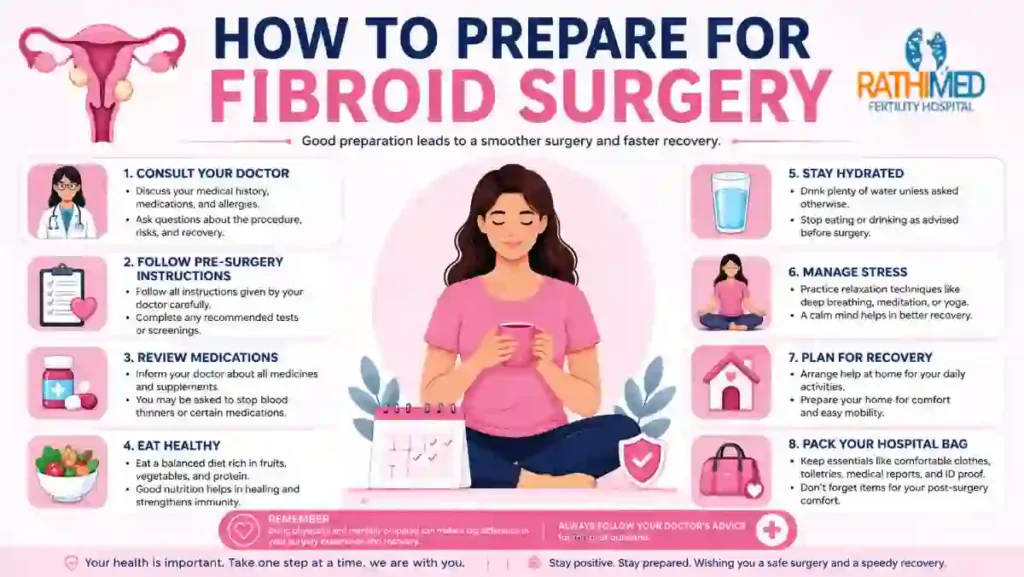
3. Adjust Your Diet and Medications
What you eat — and what you stop taking — in the week before surgery can affect healing and anesthesia safety.
- Cut back on processed food, excess salt, and sugar, and avoid alcohol in the days leading up to surgery.
- Ask your doctor which medications to pause. Blood thinners, certain supplements (like fish oil or vitamin E), and some herbal remedies are commonly stopped 5–7 days before surgery.
- Stay well hydrated in the days before, since this supports easier IV access and recovery.
4. Set Up Your Home for Recovery
A little preparation at home goes a long way once you’re discharged.
- Create a resting space on the ground floor if possible, so you’re not climbing stairs in the first few days.
- Stock up on groceries, medications, and essentials in advance so you don’t need to run errands during recovery.
- Arrange help from a family member or friend for at least the first week — you’ll likely need support with lifting, cooking, and errands.
5. Follow Fasting and Hygiene Instructions
Your hospital will give you specific pre-operative instructions — follow them exactly, since they’re there to reduce anesthesia risk and infection.
- Fasting: typically no food or drink for 6–8 hours before surgery, though your anesthesia team will confirm the exact window for your procedure.
- Shower with antiseptic soap, usually the night before and morning of surgery, if instructed.
- Skip lotions, makeup, and nail polish on the day of surgery, since they can interfere with monitoring equipment.
6. Prepare Yourself Mentally
Pre-surgery nerves are completely normal. A few things that genuinely help:
- Breathing exercises or short meditation sessions in the days before can lower pre-op anxiety.
- Write down your questions so you don’t forget to ask them during your last consultation.
- Talk to someone who’s been through it, if possible — hearing a real recovery experience is often more reassuring than reading about the procedure alone.
7. Pack Your Hospital Bag
Have your bag ready a day or two in advance so there’s no last-minute scramble.
- Loose, comfortable clothing that’s easy to put on post-surgery.
- Basic toiletries — toothbrush, toothpaste, hairbrush, and any prescribed medications.
- Something to pass the time — a book, headphones, or your phone charger for the waiting period and recovery.
How to Choose the Right Surgeon
Part of learning how to prepare for fibroid surgery is choosing who performs it. A few things worth checking before you commit to a surgeon or hospital:
- Experience with your specific procedure — ask how many myomectomies (laparoscopic, robotic, or open) the surgeon performs each year.
- Fertility-focused expertise, if preserving fertility matters to you — not every gynaecologic surgeon specializes in fibroid removal with fertility preservation in mind.
- Hospital facilities, including access to blood banks, ICU support, and post-operative care, in case of unexpected complications.
A second opinion is always reasonable if you’re unsure, especially for larger or more complex fibroids.
What Fibroid Surgery Costs — and What Affects the Price
Cost is a practical part of preparing for surgery, even if it’s not always discussed upfront. In India, myomectomy costs typically vary based on:
- The surgical approach (laparoscopic and robotic procedures generally cost more than open surgery due to equipment).
- Fibroid size, number, and location, which affect operating time and complexity.
- Hospital stay length and room category.
- Whether your health insurance covers the procedure — many policies do cover myomectomy when it’s medically necessary, so it’s worth checking your policy and getting pre-authorization sorted before your surgery date.
Ask your hospital’s billing or insurance desk for a detailed cost estimate as part of your pre-surgery preparation, so there are no surprises later.
A Day-by-Day Timeline for the Week Before Surgery
Here’s roughly how the final week often looks when you prepare for fibroid surgery:
- 7 days before: Stop blood thinners, certain supplements, and herbal remedies if instructed by your doctor.
- 3–5 days before: Finish grocery shopping and prep your recovery space at home.
- 1–2 days before: Pack your hospital bag, confirm your admission time, and arrange your support person.
- The night before: Shower with antiseptic soap if instructed, and begin your fasting window as advised.
- Morning of surgery: Skip lotion and makeup, wear loose clothing, and arrive at the hospital with time to spare for final checks.
This is a general guide — always follow the specific schedule your surgical team gives you, since it can vary by procedure and anesthesia plan.
Types of Fibroid Treatment
Not everyone with fibroids needs surgery. Treatment depends on fibroid size, location, and how much they’re affecting your daily life:
- Medication: Hormonal treatments can shrink fibroids or manage symptoms, though they don’t remove the fibroids permanently.
- Non-surgical options: Uterine Fibroid Embolization (UFE) cuts off blood supply to fibroids, causing them to shrink without an incision.
- Surgical options:
- Myomectomy — removes fibroids while keeping the uterus intact, often preferred by women planning future pregnancies.
- Hysterectomy — removes the uterus entirely, typically reserved for severe or recurrent cases where fertility isn’t a concern.
Is Surgery Always Necessary?
Not always. Many women manage fibroids with medication or non-invasive procedures. Surgery becomes the recommended path when:
- Bleeding or pain is significant enough to affect daily life.
- Fibroids are affecting fertility and other treatments haven’t worked.
- Fibroids are too large or numerous for non-surgical options like UFE to be effective.
If your doctor recommends surgery, ask directly what your specific pre-operative plan should look like — it can vary based on the type and size of the procedure.
What Are the Risks of Fibroid Surgery?
As with any surgery, there are risks to be aware of and to discuss with your surgeon beforehand:
- Bleeding or infection during or after the procedure.
- A small risk of impact on future fertility, more relevant in hysterectomy than myomectomy.
- Scar tissue formation or, less commonly, hormonal changes afterward.
Being aware of these risks — and asking your surgeon how they apply to your specific case — is part of informed, confident preparation.
What to Eat After Fibroid Surgery
Recovery nutrition is often left out of pre-surgery advice, even though it directly affects healing speed:
- Start with light, easily digestible food — soups, khichdi, and fruit — for the first day or two, especially after general anesthesia.
- Add fibre gradually (whole grains, cooked vegetables) to prevent constipation, which is common after abdominal surgery and pain medication use.
- Include protein-rich foods — eggs, dal, lean meat, or paneer — to support tissue healing.
- Stay hydrated, and limit caffeine and fried food until your energy and digestion return to normal.
Warning Signs to Watch for After Surgery
Knowing what’s normal versus what needs urgent attention is as important as knowing how to prepare for fibroid surgery in the first place. Contact your hospital promptly if you notice:
- Fever above 100.4°F (38°C).
- Heavy bleeding that soaks through a pad within an hour.
- Increasing redness, swelling, or discharge at the incision site.
- Severe pain that isn’t controlled by your prescribed medication.
- Difficulty urinating or persistent nausea and vomiting.
When in doubt, call your surgical team rather than waiting — early attention to these signs prevents most complications from becoming serious.
Final Thoughts
Learning how to prepare for fibroid surgery comes down to a handful of practical steps: getting your pre-surgery tests done, adjusting your diet and medications as advised, setting up your home for recovery, and giving yourself space to process the emotional side of it too. The more informed you are going in, the more in control you’ll feel — both on the day of surgery and during the weeks of recovery after.
If you have questions specific to your situation, book a consultation with our fertility and gynaecology team — we’re here to help you prepare with confidence.