
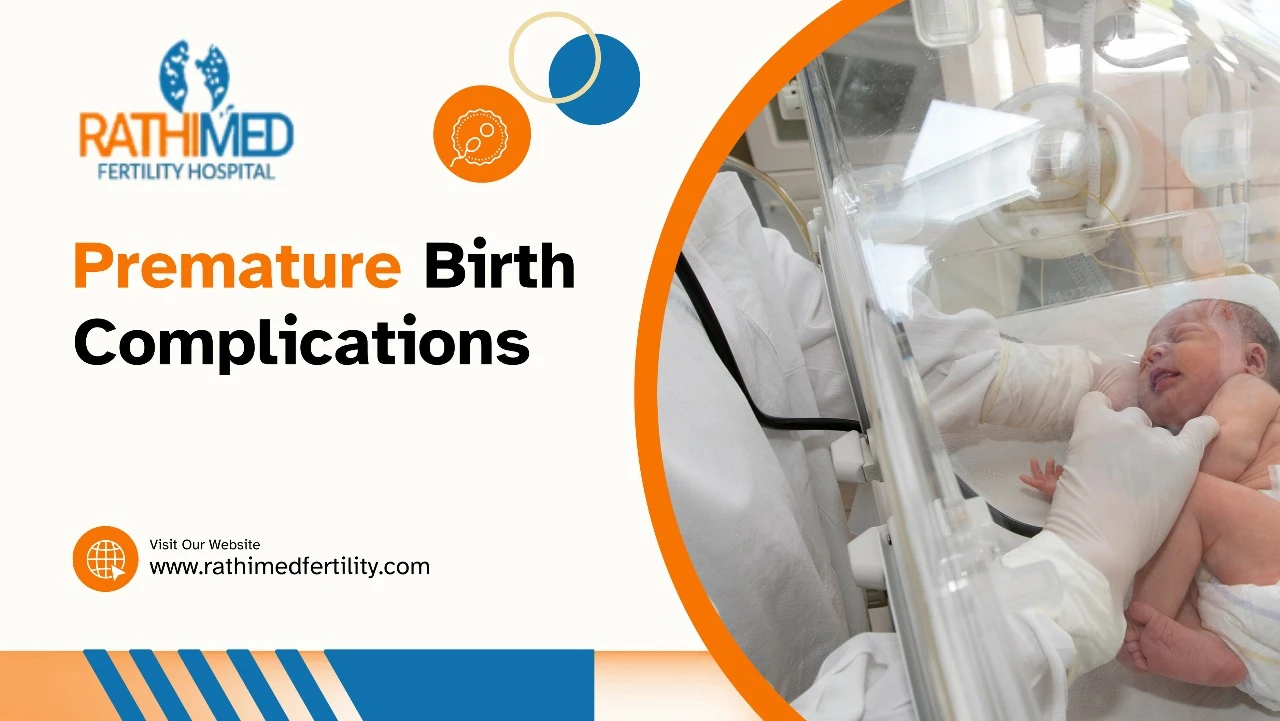
Premature birth complications are a significant concern for expecting parents, as they can affect both the immediate and long-term health of a newborn. A baby born before completing 37 weeks of pregnancy is considered premature, and such early births often come with various medical challenges. Understanding premature birth complications helps parents prepare better, seek timely medical care, and improve outcomes for both mother and baby.
With advancements in medical science, survival rates for premature babies have improved considerably. However, premature birth complications still require specialized care and close monitoring. At Rathimed Fertility Centre, we emphasize early diagnosis, expert care, and continuous support to ensure the best possible outcomes for families.
Overview of Premature Birth
Premature birth occurs when a baby is delivered before the full term of 37 weeks. Depending on how early the baby is born, premature birth is classified into different categories:
- Late preterm: 34 to 36 weeks
- Moderate preterm: 32 to 34 weeks
- Very preterm: 28 to 32 weeks
- Extremely preterm: less than 28 weeks
The earlier the baby is born, the higher the risk of premature birth complications. This is because vital organs such as the lungs, brain, and digestive system may not be fully developed. As a result, premature babies often require immediate medical attention and specialized care.
Premature birth is becoming more common due to factors such as lifestyle changes, delayed pregnancies, and increased prevalence of medical conditions. Awareness plays a crucial role in reducing risks and improving outcomes.
What Causes Premature Birth?
There are several factors that can lead to premature birth, although in some cases, the exact cause may not be identified. Understanding these causes can help reduce the chances of premature birth complications.
- Medical Conditions: Certain maternal health conditions increase the risk of early delivery, including high blood pressure, diabetes, infections, and placental abnormalities. These conditions may affect the baby’s growth and trigger early labor.
- Pregnancy-Related Factors: Carrying multiple babies, such as twins or triplets, increases the likelihood of premature birth. A short cervix or a history of previous premature delivery can also contribute to early labor.
- Lifestyle Factors: Unhealthy habits such as smoking, alcohol consumption, poor nutrition, and high stress levels can increase the risk of premature birth complications. Maintaining a healthy lifestyle is essential for a safe pregnancy.
Risk Factors for Premature Birth
Several risk factors can increase the chances of delivering a baby prematurely. These include:
- Maternal age below 18 or above 35
- Short interval between pregnancies
- Chronic health issues such as thyroid disorders
- Lack of proper prenatal care
- Poor diet and inadequate nutrition
Identifying these risk factors early allows doctors to take preventive measures and closely monitor the pregnancy. This significantly reduces the likelihood of premature birth complications.
Common Premature Birth Complications
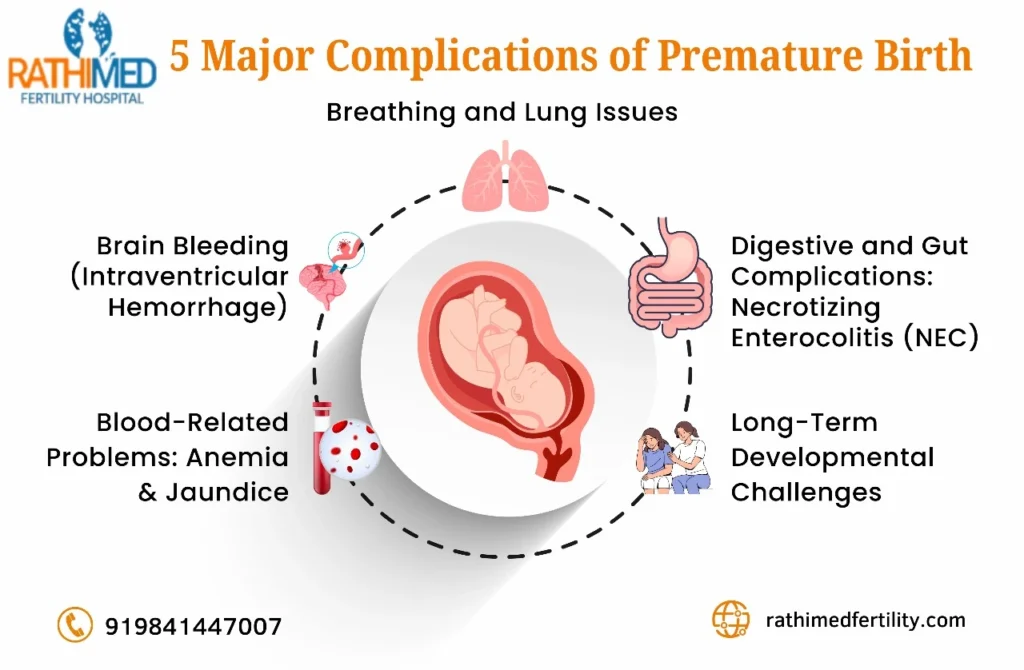
Premature birth complications can affect various systems in a baby’s body. The severity of these complications depends on how early the baby is born.
- Breathing Difficulties: One of the most common premature birth complications is Respiratory Distress Syndrome. Since the lungs are not fully developed, babies may require oxygen support or ventilators.
- Low Birth Weight: Premature babies are often born with low birth weight, making them more vulnerable to infections and developmental delays.
- Feeding Problems: Premature infants may have difficulty sucking and swallowing, which affects their ability to feed properly. This often requires tube feeding until the baby develops the necessary reflexes.
- Weak Immune System: A premature baby’s immune system is not fully developed, increasing the risk of infections. Proper hygiene and medical care are essential to prevent complications.
- Brain Development Issues: Some premature babies may experience brain-related complications such as bleeding in the brain. These conditions require careful monitoring and treatment.
These premature birth complications highlight the importance of specialized neonatal care.
Long-Term Health Concerns
While many premature babies grow up healthy, some may experience long-term health challenges. These may include developmental delays, learning difficulties, and sensory issues.
Parents often worry about premature baby problems later in life, especially regarding growth, education, and behavior. While not all premature babies face these challenges, early intervention and continuous monitoring can significantly improve outcomes.
With proper medical care, therapy, and parental support, many children overcome these difficulties and lead healthy, fulfilling lives.
Diagnosis and Early Detection
Early diagnosis plays a key role in preventing premature birth complications. Doctors use various methods to monitor pregnancy and detect potential risks.
Regular ultrasound scans help track the baby’s growth and development. Cervical length measurement can indicate the risk of preterm labor. Blood and urine tests help detect infections or underlying health conditions.
Pregnant women should also be aware of warning signs such as frequent contractions, lower back pain, pelvic pressure, or fluid leakage. Early detection allows doctors to take timely action and prevent complications.
Preventing Premature Birth
Many parents ask how to prevent premature birth, and while not all cases can be avoided, certain steps can reduce the risk significantly.
- Healthy Diet and Nutrition: A balanced diet rich in vitamins, minerals, and protein supports the baby’s growth and reduces complications.
- Regular Prenatal Care: Routine checkups help monitor the pregnancy and detect any issues early. Following medical advice is essential for a healthy pregnancy.
- Managing Health Conditions: Controlling conditions such as diabetes and high blood pressure can prevent premature labor.
- Avoiding Harmful Habits: Eliminating smoking, alcohol, and drug use is crucial for reducing premature birth complications.
- Stress Reduction: Managing stress through relaxation techniques, adequate rest, and emotional support contributes to a healthier pregnancy.
Understanding how to prevent premature birth empowers parents to take proactive steps toward a safer pregnancy.
Treatment and Care for Premature Babies
Premature babies often require immediate medical attention and specialized care after birth.
- Neonatal Intensive Care: Babies are usually admitted to a Neonatal Intensive Care Unit (NICU), where they receive constant monitoring and care.
- Respiratory Support: Oxygen therapy or ventilators are used to help babies breathe until their lungs mature.
- Feeding Assistance: Tube feeding ensures that the baby receives adequate nutrition until they can feed independently.
- Infection Prevention: Strict hygiene practices and medical supervision help protect premature babies from infections.
Many parents wonder when is a premature baby out of danger. Generally, a baby is considered stable when they can breathe on their own, maintain body temperature, and feed without assistance. However, each baby’s progress is unique and requires careful monitoring.
Effects on the Mother
Premature birth can also have a significant impact on the mother’s physical and emotional well-being. The effects of premature birth on mother may include stress, anxiety, and emotional challenges.
Mothers may feel worried about their baby’s health and experience guilt or fear. Physical recovery may also take longer due to complications associated with early delivery.
Providing emotional support, counseling, and proper medical care is essential to help mothers cope with these challenges and recover effectively.
How Rathimed Fertility Centre Supports Parents
At Rathimed Fertility Centre, we understand that premature birth complications can be overwhelming for families. Our approach focuses on comprehensive care, combining medical expertise with emotional support.
- Experienced Specialists: Our team of experts provides advanced care for high-risk pregnancies and premature births.
- Advanced Technology: We use modern diagnostic tools to monitor pregnancy and detect risks early.
- Personalized Care: Every patient receives a customized treatment plan based on their medical history and condition.
- High-Risk Pregnancy Management: We specialize in handling complex pregnancies, ensuring the best possible outcomes.
- Emotional Support: We provide counseling and guidance to help parents manage stress and anxiety during this challenging time.
- Continuous Monitoring: From conception to delivery and beyond, we ensure that both mother and baby receive the highest level of care.
Our goal is to minimize premature birth complications and help families experience a safe and healthy journey.
When to Consult a Doctor
It is important to seek immediate medical attention if you notice any signs of preterm labor. These include:
- Regular contractions before 37 weeks
- Persistent lower back pain
- Pelvic pressure
- Vaginal bleeding
- Fluid leakage
Early medical intervention can prevent serious premature birth complications and improve outcomes for both mother and baby.
Conclusion
Premature birth complications can be challenging, but with the right care and support, many risks can be managed effectively. Awareness, early diagnosis, and preventive measures play a crucial role in ensuring a healthy pregnancy and safe delivery.
Understanding the causes, risk factors, and treatment options helps parents feel more confident and prepared. With expert guidance and compassionate care from Rathimed Fertility Centre, families can navigate this journey with reassurance.
If you are planning a pregnancy or experiencing any concerns, seeking timely medical advice can make a significant difference in preventing premature birth complications and ensuring the well-being of both mother and baby.
Read Also: IVF Treatment in Chennai.