

Starting fertility treatment often brings relief and fear in the same week. Relief, because there is finally a plan; fear, because the outcome is uncertain and so much of the process feels out of your hands. If that sounds familiar, you are far from alone, and what you feel is a normal response to a demanding situation.
Infertility is a medical condition, not a personal failure. It can come from the woman, the man, both partners, or sometimes from no cause that tests can identify. What helps most is a clear understanding of your options, a medical team you trust, and people around you who offer support rather than pressure.
This guide brings together both sides of the experience: what to expect from treatment at a clinic such as Rathimed Fertility Centre in Chennai, and the everyday coping strategies that many patients find useful. It is meant to be read alongside, not instead of, a consultation with your own doctor.
Why infertility treatment feels so hard
Infertility is more common than many people expect, and it affects men and women alike. Doctors usually advise an evaluation after 12 months of trying without success, or after 6 months if the woman is 35 or older.
Even after that first step, treatment brings its own strain: frequent clinic visits, injections, long waits, and results that no one can fully predict. This guide shares practical steps to ease the infertility treatment journey, from managing emotions to understanding your medical options. It is written for couples and individuals at any stage, whether you are just starting tests or preparing for IVF.
Causes are shared more evenly than most people assume. As a rough guide, problems with ovulation, the fallopian tubes, or the uterus account for a large share of cases, male factors such as low sperm count or poor sperm movement account for a similar share, and some couples have a combination of both or no clear cause at all. This is why doctors evaluate both partners rather than looking at one person alone, and why blame has no place in the conversation.
Treatments you may come across
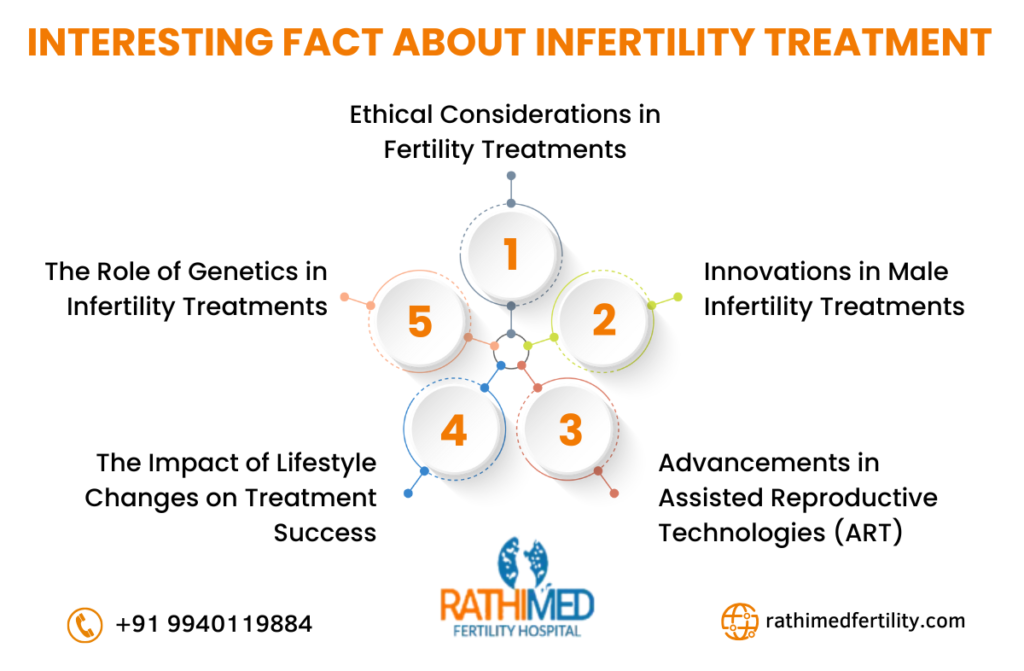
The right treatment depends on the diagnosis, age, and medical history of both partners. Infertility treatment for female patients often begins with ovulation tracking, hormone tests, and scans, and may move on to IUI or IVF if needed. At Rathimed Fertility Centre in Chennai, the options include:
- Ovulation induction and cycle monitoring
- Intrauterine insemination (IUI)
- In-vitro fertilisation (IVF)
- Intracytoplasmic sperm injection (ICSI)
- Assisted laser hatching
- Frozen embryo transfer (FET)
- Egg freezing
- Egg donation and surrogacy
- Genetic testing with PGS or PGD
Male factors matter just as much. Male treatment for infertility in male partners depends on the cause and may include medication, treating conditions such as varicocele, or sperm retrieval combined with ICSI. Read more about male infertility treatments.
What to expect: the stages of treatment
Every plan is individual, but most patients move through a similar sequence.
- Consultation and history. Your doctor reviews your medical history, cycle pattern, age, and how long you have been trying.
- Investigations. These usually include blood tests (often hormone levels and AMH), a pelvic ultrasound, and a semen analysis for the male partner. Some patients need further tests of the tubes or the uterus.
- First-line treatment. Depending on the findings, this may mean medication to support ovulation, cycle monitoring, lifestyle changes, or treating an underlying condition such as PCOS or varicocele.
- IUI or IVF/ICSI. If simpler options are unsuitable or have not worked, your doctor may recommend IUI or IVF. In an IVF cycle, medicines stimulate the ovaries, eggs are collected and fertilised in the laboratory, and one or more embryos are transferred to the uterus.
- The waiting period. A pregnancy test is usually done about two weeks after embryo transfer or insemination. Many patients find this the hardest stretch, so plan something calming for those days.
- Review and next steps. Whatever the result, your doctor will go through it with you and agree the next step, whether that is antenatal care, another cycle, or a change in approach.
Eight ways to cope during treatment
1. Focus on what you can control
You can’t control how your body responds to a cycle, but you can control sleep, meals, appointments, and the questions you bring to your doctor. Small routines can ease the infertility treatment journey because they give structure to weeks that otherwise feel uncertain.
Practical ideas include keeping one notebook or phone note for medicines, appointment dates, and questions, setting reminders for injections, and deciding in advance who will go with you to key visits. Handling logistics this way frees up energy for the emotional side of treatment.
2. Lean on your support system
Talk to your partner first, then to one or two trusted friends or relatives. Having someone to listen can ease the infertility treatment journey in ways no medical tip can. Some people also find fertility support groups helpful, because others there already understand the situation.
3. Ask for help early
Don’t wait until you feel overwhelmed. Ask your doctor to explain anything unclear, and ask your partner to share appointments, injections, and decisions. Treatment goes better as a shared effort.
If cost or logistics are part of the stress, say so. Many clinics can break down the expected expenses, and knowing the full picture early prevents unpleasant surprises midway through a cycle.
4. Look after your mind and body
Fertility medicines can cause mood swings, bloating, and tiredness. If you are wondering how to deal with infertility mentally, start small: regular meals, enough sleep, a short daily walk, and one activity you enjoy each week.
Sadness is normal during treatment, but dealing with infertility depression can feel isolating and needs proper attention. Low mood, loss of interest, changes in sleep or appetite, or feelings of hopelessness that last two weeks or more are good reasons to speak to your doctor or a mental health professional. If you ever think about harming yourself, seek help immediately.
5. Set boundaries
Relatives and colleagues often ask well-meaning but painful questions. You decide what to share and with whom. A short, polite line such as “We’d rather not discuss it right now, thank you” is enough.
It also helps to decide in advance how you will handle events such as baby showers or family gatherings where pregnancy is the main topic. Arriving late, leaving early, or sending a kind message instead of attending are all reasonable choices.
6. Check in with yourself regularly
Once a week, ask yourself how you are really feeling: hopeful, tired, anxious, numb? Noticing a pattern early lets you ask for support sooner. Tell your care team too, since they can only help with what they know.
A simple method is to rate your mood out of ten each evening for a couple of weeks. You are not looking for a perfect score, only for a trend. A steady slide over several days is worth raising with your care team.
7. Take breaks when you need them
A planned pause between cycles can ease the infertility treatment journey when you feel emotionally drained. Discuss the timing with your doctor, especially if age or ovarian reserve is a factor, so that a break doesn’t cost you more than you expect.
8. Keep the bigger picture in view
Treatment is often a series of steps, and not every step ends in a pregnancy. Each cycle still gives your doctor information that helps shape the next plan. Success rates vary widely by age and diagnosis, so ask for figures that apply to your situation.
Learning how to accept infertility and move on does not mean giving up hope or stopping treatment. It means making peace with what you cannot change, so that your sense of worth does not rest on the result of a single cycle. Counselling can also help if you are deciding whether to continue, try donor options, or explore adoption.
Supporting each other as a couple
Infertility affects partners differently. One may want to talk constantly while the other withdraws, and both responses are normal. Men in particular may feel pressure to stay strong and keep worries to themselves, even when a male factor is part of the diagnosis.
A few habits protect the relationship:
- Set aside a regular time to talk about treatment, and keep other evenings free of it.
- Share tasks such as appointments, medicine schedules, and paperwork.
- Avoid assigning blame, whatever the test results show.
- Make time for things you enjoyed before treatment began, such as meals out, walks, or short trips.
- Consider couples counselling if the same argument keeps repeating.
Partners often grieve at different speeds. Patience, and a willingness to say “I’m struggling today”, go a long way.
Understanding your treatment plan
Understanding each step is one of the simplest ways to ease the infertility treatment journey, because uncertainty fuels much of the anxiety. Before starting, consider asking your doctor:
- What is my diagnosis, and what does each test result mean?
- Why is this treatment recommended over the alternatives?
- What are the risks, side effects, and realistic chances for my age and history?
- What is the full cost, and what is included?
- What happens if this cycle doesn’t work?
Writing questions down before appointments helps, as it is easy to forget them in the room. For a clear walkthrough of a cycle, read our steps of the IVF process or browse patient education.
Lifestyle habits that support fertility
Healthy habits cannot replace medical care, but they can ease the infertility treatment journey by supporting general health and lowering stress.
- Know your cycle. Ovulation predictor kits or a basal body temperature chart can help you time intercourse. Your doctor can advise if cycles are irregular.
- Eat a balanced diet with vegetables, fruit, protein, and whole grains.
- Stay active, without extreme exercise.
- Limit alcohol and caffeine, and avoid smoking, for both partners.
- Manage stress with walking, yoga, or breathing exercises.
- Ask about folic acid. Doctors commonly recommend a supplement before conception, but the dose should come from your doctor.
If you have PCOS, thyroid issues, or low ovarian reserve, ask for personalised advice. See our pages on PCOS and low AMH.
When to see a fertility specialist
Consider an appointment if:
- you have tried for 12 months without success (6 months if the woman is 35 or older),
- cycles are very irregular or absent,
- you have known conditions such as PCOS, endometriosis, fibroids, or a previous pelvic infection,
- there are known sperm concerns, or
- you have had repeated miscarriages or failed IVF cycles.
To get started, book an appointment or call +91 98414 47007. Confirm which of the two numbers on the site is correct before publishing.
Conclusion
Fertility treatment asks a lot of the body, the mind, and the relationship. No single tip removes that strain, but the steps in this guide can make it lighter: understand your diagnosis and plan, lean on the people who help, protect your health, and give yourself permission to rest when you need to.
Keep in mind that your worth is not measured by any one result, and that asking for help is part of the process, not a sign of weakness. If you are ready for the next step, or simply want clarity on where you stand, the team at Rathimed Fertility Centre in Anna Nagar, Chennai can review your history and suggest a plan that fits you. Book an appointment or meet our doctors to get started.