
Medically Reviewed by: Dr. G. Praveena Ragunanthan, MBBS, MS (OBG), DRM (Germany) — Senior Consultant, Reproductive Endocrinology & Infertility, and Director, Rathimed Speciality HospitalNutrition is one of the few fertility factors you can actively control. While age, genetics, and underlying conditions play a role in conception, what you eat every day directly affects hormone regulation, egg and sperm quality, and your body’s overall readiness for pregnancy. This is why so many patients search for the best foods for fertility when they begin trying to conceive.
At Rathimed Fertility Centre, our specialists routinely see how dietary changes — alongside appropriate medical care — improve outcomes for patients undergoing fertility treatment. This guide breaks down the nutrients and foods most strongly linked to reproductive health, practical natural ways to boost fertility, and what to eat if you’re currently undergoing treatment.
Understanding Fertility and the Role of Nutrition
Fertility depends on a combination of hormonal balance, reproductive organ health, age, and lifestyle. Diet influences nearly all of these factors — it affects insulin sensitivity, inflammation levels, egg maturation, and sperm production.
Nutritional deficiencies are also common contributors to conditions like PCOS, which affects ovulation in a significant number of women trying to conceive. Choosing foods that improve fertility won’t resolve every underlying issue on its own, but it creates a stronger physiological foundation for both natural conception and assisted reproduction procedures such as IVF or IUI.
“Diet is one of the first things we discuss with new patients,” notes Dr. G. Praveena Ragunanthan, Director of Rathimed Speciality Hospital. “It’s a factor patients can start improving immediately, even before their first consultation.”
Essential Nutrients That Support Reproductive Health
Folic Acid
Folic acid supports cell division and DNA synthesis, which is why it’s recommended before and during pregnancy. Most guidelines suggest 400–800 mcg daily for women trying to conceive, ideally starting at least a month before conception.
Iron
Low iron levels have been linked to ovulatory dysfunction. Lentils, spinach, and lean red meat are practical dietary sources, though some women may also need supplementation — this is worth discussing with your doctor.
Omega-3 Fatty Acids
Found in fatty fish, walnuts, and flaxseeds, omega-3s help regulate hormone production and have been associated with improved egg and sperm quality.
Protein
Adequate protein intake supports hormone synthesis and tissue repair. Research suggests that partially replacing animal protein with plant-based sources (beans, lentils, tofu) may be particularly beneficial for ovulatory function.
Vitamin D
Vitamin D receptors are present in reproductive tissue, and deficiency has been associated with lower IVF success rates in some studies. Sunlight exposure, fortified dairy, and eggs are common sources.
Antioxidants
Vitamins C and E, along with compounds like beta-carotene and CoQ10, help protect eggs and sperm from oxidative stress — a known factor in age-related fertility decline.
Together, these nutrients form the backbone of the best foods for fertility — no single food or supplement replaces a consistently balanced diet.
Fertility-Friendly Foods for Women
- Leafy greens (spinach, kale, broccoli) are rich in folate, iron, and antioxidants that support ovulation.
- Whole grains such as brown rice, quinoa, and oats help stabilize blood sugar and improve insulin sensitivity — especially relevant for women managing PCOS or insulin resistance.
- Antioxidant-rich fruits, including berries, oranges, and pomegranates, help protect egg cells from cellular damage over time.
- Nuts and seeds, particularly almonds, walnuts, flaxseeds, and chia seeds, provide healthy fats along with vitamin E and zinc.
- Full-fat dairy, in moderate amounts, has been associated in some studies with improved ovulatory function, though low-fat dairy hasn’t shown the same benefit.
Building daily meals around these options is one of the simplest foods to increase fertility naturally strategies available, and it requires no special products or supplements.
Nutrition for Male Fertility
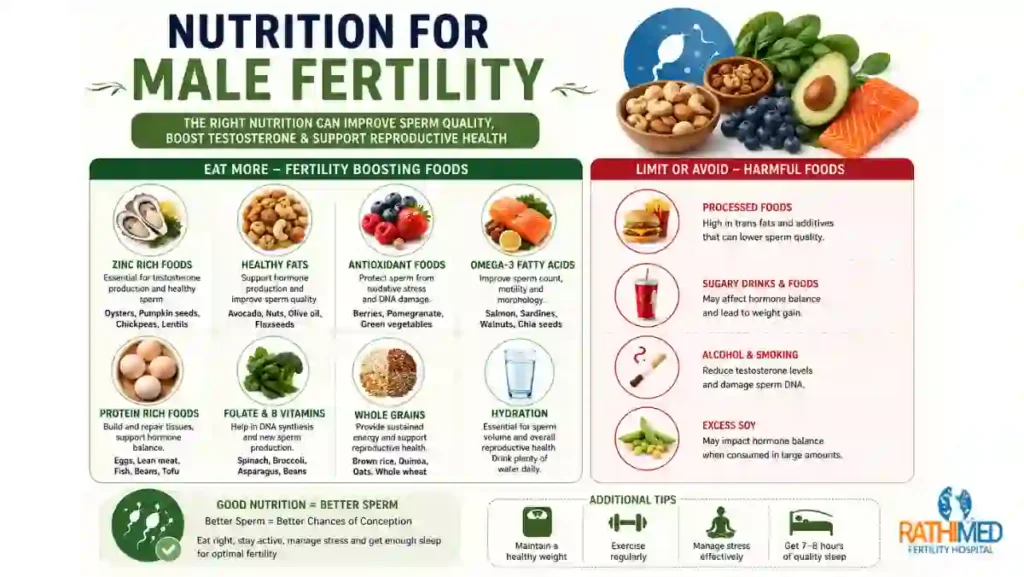
Sperm health is just as diet-dependent as egg quality, and roughly a third of infertility cases involve a male factor. Our male infertility treatment team frequently recommends the following alongside clinical care:
- Zinc-rich foods — pumpkin seeds, eggs, legumes — support healthy sperm count and morphology.
- Omega-3-rich fish like salmon and sardines improve sperm motility and structural quality.
- Foods that support testosterone production, such as garlic, leafy greens, and eggs, may help maintain hormonal balance needed for healthy sperm production.
Men with concerns about sperm quality can also read more about semen analysis testing to get a clearer picture before making major dietary or lifestyle changes. When both partners commit to the best foods for fertility, overall conception outcomes tend to improve.
Five Fertility Superfoods Worth Prioritizing
If you’re looking for a shortlist of foods that improve fertility to build meals around:
- Avocados — healthy monounsaturated fats and vitamin E
- Eggs — high-quality protein and choline, important for fetal neural development
- Salmon — one of the richest dietary sources of omega-3s
- Sweet potatoes — beta-carotene, which the body converts to vitamin A
- Lentils — plant-based protein, iron, and folate in one food
Foods and Habits to Limit
Diet quality matters as much for what you avoid as what you add:
- Ultra-processed and packaged foods
- Trans fats (common in fried and packaged baked goods)
- Sugar-sweetened beverages
- High caffeine intake (generally advised to stay under 200mg/day)
- Alcohol
Cutting back on these has been linked to better hormonal regulation and reduced inflammation — both relevant to conception.
Hydration and Fertility
Water intake is often overlooked in fertility discussions, but adequate hydration supports healthy cervical mucus production, which plays a role in sperm transport during the fertile window. Aim for roughly 2–2.5 liters of water daily, and limit sugary or caffeinated drinks as substitutes.
Weight, BMI, and Fertility
Both being underweight and overweight can disrupt ovulation and hormone balance. Body fat percentage directly influences estrogen production, so significant weight fluctuations — in either direction — can delay conception. A registered dietitian or your fertility specialist can help identify a healthy target range specific to your body and diagnosis, rather than relying on generic BMI charts alone.
Foods to Eat During Fertility Treatment
Patients undergoing IUI or IVF often ask what to eat during active treatment cycles. While your clinical team will give condition-specific guidance, general principles include:
- Prioritizing foods to eat during fertility treatment that are anti-inflammatory — olive oil, fatty fish, colorful vegetables
- Increasing protein slightly during ovarian stimulation, as recommended by many IVF nutrition protocols
- Staying well hydrated, particularly around egg retrieval
- Avoiding new or unfamiliar supplements without checking with your doctor, since some can interact with fertility medications
- Limiting raw or undercooked foods once pregnancy is confirmed, as a general food-safety precaution
A Sample Day of Fertility-Friendly Eating
| Meal | Suggestions |
|---|---|
| Morning | Warm water with lemon; oats with nuts and fresh fruit |
| Mid-morning | Greek yogurt or a piece of fruit |
| Lunch | Brown rice or quinoa, mixed vegetables, lentils, lean protein |
| Evening snack | A small handful of mixed nuts and seeds |
| Dinner | Whole wheat roti, leafy greens, paneer or grilled fish |
This is a general template — patients undergoing active treatment should follow the specific dietary guidance given by their care team, since caloric and nutrient needs can shift during ovarian stimulation or post-transfer.
Common Myths About Fertility Diets
“Cutting out all carbs improves fertility.” Not accurate — complex carbohydrates like whole grains and legumes are part of a healthy fertility diet. It’s refined carbs and added sugar that are worth limiting.
“Fertility supplements can replace food.” Supplements can fill specific gaps (like folic acid), but they don’t replicate the full nutrient profile of whole foods and shouldn’t be treated as a shortcut.
“Soy is harmful to fertility.” Moderate soy consumption hasn’t been shown to negatively affect fertility in most studies and can be a useful plant-based protein source.
Lifestyle Habits That Complement a Fertility Diet
Nutrition works best alongside these habits:
- Maintaining a healthy body weight
- Regular, moderate exercise
- Stress management through yoga, meditation, or counseling
- Consistent, adequate sleep
- Avoiding smoking and alcohol
Combining these habits with the best foods for fertility gives couples a well-rounded, natural approach to improving their chances of conception.
When to Consult a Fertility Specialist
If you’ve been trying to conceive for over a year (or six months if you’re over 35) without success, it’s a reasonable time to seek a professional evaluation. Diet adjustments can support your body, but they can’t diagnose or resolve underlying issues like blocked fallopian tubes, low ovarian reserve, or male-factor infertility.
Our team offers a full patient education resource covering treatment options, from initial diagnostics through IVF and beyond, so you know what to expect at each stage.
Why Patients Choose Rathimed Fertility Centre
Rathimed Fertility Centre combines clinical fertility treatment with personalized lifestyle and nutrition guidance. Led by Dr. G. Praveena Ragunanthan, our team takes a patient-centered approach, tailoring dietary recommendations to each individual’s diagnosis, treatment stage, and health history rather than offering one-size-fits-all advice.
The Bottom Line
Diet alone rarely resolves fertility challenges, but choosing the best foods for fertility is one of the most controllable steps in the process. Prioritizing whole foods, healthy fats, plant-based protein, and key micronutrients — while limiting processed foods, alcohol, and excess caffeine — gives your body a stronger foundation for conception, whether you’re trying naturally or currently in treatment.