
Medically Reviewed by Dr. G. Praveena Ragunanthan, MBBS, MS (Obstetrics & Gynaecology), DRM (Kiel University, Germany), Senior Consultant — Obstetrics, Gynaecology & Reproductive Endocrinology; Director & Managing Partner, Rathimed Speciality Hospital, Chennai (10+ years of clinical experience)Undergoing intrauterine insemination (IUI) brings a mix of hope and uncertainty, and it’s natural to want to do everything right afterward. One of the most common questions our patients ask is about the best sleeping position after IUI, and whether it can influence whether the procedure succeeds.
While IUI is a simple, minimally invasive procedure, post-procedure care still matters — from rest and diet to emotional wellbeing. This guide covers the ideal sleeping position after IUI, the correct sleeping posture after IUI, common questions like can I turn sides after IUI and do I need bed rest after IUI, and the practical, doctor-reviewed care tips that actually make a difference.
What Happens During IUI
During intrauterine insemination (IUI), a specially prepared sperm sample is inserted directly into the uterus through a thin catheter, timed closely with ovulation. The process typically involves:
- Monitoring or inducing ovulation with medication
- Washing and concentrating the sperm sample in the lab
- Placing the sperm into the uterus through the cervix
Fertilization then happens naturally inside the fallopian tube, and if successful, the embryo implants in the uterine lining several days later. Nothing about how you sleep that night interrupts this internal process.
What’s the Ideal Sleeping Position After IUI?
There’s no clinical evidence that lying on your back, side, or stomach changes fertilization or implantation rates after IUI. Even so, choosing an ideal sleeping position after IUI can help in other meaningful ways:
- Promotes relaxation and reduces stress
- Supports healthy blood circulation
- Prevents unnecessary pressure on the abdomen
- Helps maintain emotional comfort during the waiting period
The goal isn’t to follow a strict rule — it’s to keep your body calm and supported.
Comfortable Sleeping Positions to Consider
When patients ask about the best sleeping position after IUI, they’re usually looking for something practical they can actually stick to through the two-week wait. Two options tend to work well for most people.
Sleeping on Your Back
Many patients find back-sleeping the easiest way to stay relaxed in the days following IUI. It keeps the spine neutral and avoids putting weight on the abdomen.
Why it helps:
- Keeps the body in a neutral, low-strain position
- Reduces unnecessary abdominal pressure (general guidance on uterine health)
- Minimizes tossing and turning overnight
A pillow under the knees or lower back can add extra support if you’re prone to lower-back discomfort.
Side Sleeping (Left Side, If You Prefer It)
If back-sleeping isn’t comfortable, side sleeping — particularly on the left — is a reasonable alternative. Some clinicians suggest the left side may modestly support circulation, though this hasn’t been shown to influence IUI outcomes specifically.
Why it helps:
- Comfortable for extended periods of sleep
- Eases pressure on the lower back
- A natural choice if you already sleep on your side
Maintaining the Correct Sleeping Posture After IUI
Whichever position you choose, maintaining a correct sleeping posture after IUI is really about avoiding strain rather than following one fixed rule. Keep your spine reasonably aligned, use pillows for support where needed, and avoid positions that pull or twist the abdomen.
| Expert Tip “Patients often ask me to name one best sleeping position after IUI, but in my clinical experience, the real answer is the position that lets you fall asleep without effort. Forcing an unnatural posture just to follow a rule usually adds more stress than it removes.” — Dr. G. Praveena Ragunanthan, Senior Consultant, Obstetrics & Gynaecology |
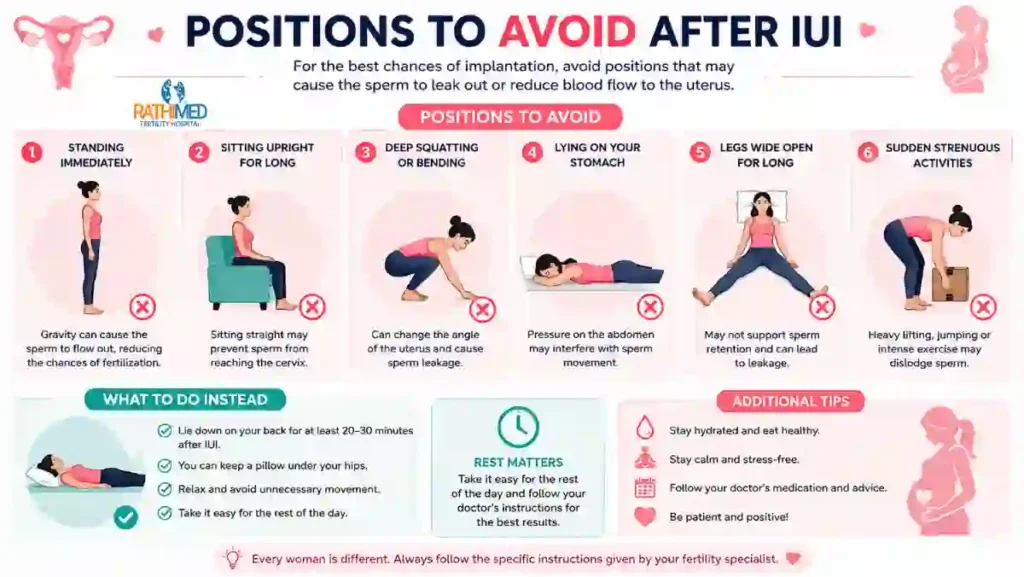
Positions Best Avoided in the First Few Days
None of these will “undo” an IUI, but they can cause unnecessary discomfort:
Stomach Sleeping
- Adds direct pressure on the abdomen
- Can feel uncomfortable if you’re experiencing mild post-procedure cramping
Twisted or Tightly Curled Positions
- May cause muscle tension or a restless night
- Can compress the abdomen if held for long stretches
Can I Turn Sides After IUI?
A very common question we hear is: can I turn sides after IUI? The answer is yes. You don’t need to stay frozen in one position all night. Normal movement, including turning from your back to your side, will not disturb the sperm or affect implantation — the uterus and cervix protect the insemination site regardless of how you move. Trying to stay perfectly still usually adds stress without any real benefit.
Do I Need Bed Rest After IUI?
Another frequent concern is: do I need bed rest after IUI? Most clinics, including ours, recommend the following:
| Timeframe | What’s Recommended |
| Immediately after IUI | Rest at the clinic for 15–30 minutes |
| First 24 hours | Avoid strenuous activity; light movement is fine |
| After 48 hours | Gradually resume your normal routine |
Prolonged bed rest isn’t necessary and, for some patients, adds stress without any proven benefit. Always follow the specific instructions your doctor gives you, since individual circumstances vary.
IUI vs IVF: Does Sleeping Position Matter Differently?
This is a question we get often, since many patients researching IUI also come across IVF advice online. The short answer: rest and posture recommendations are broadly similar for both procedures, though IVF embryo transfer involves a slightly more sensitive recovery window in the first 24 hours. In both cases, there’s no scientifically proven best sleeping position after IUI or embryo transfer — the emphasis is on comfort, avoiding strain, and following your clinic’s specific instructions.
If you’re exploring further treatment options, our IVF treatment page outlines how post-procedure care differs slightly between IUI and IVF cycles.
What Clinical Guidance Generally Says About Rest and Activity
Professional fertility bodies generally advise against prolonged bed rest after IUI, noting that normal daily activity does not reduce the chances of implantation. This is consistent with what we see in practice: patients who return to gentle, everyday routines tend to report lower anxiety during the two-week wait than those who restrict themselves heavily. If your clinic has given you specific post-procedure instructions, those individualized recommendations should always take priority over general guidance.
Sleep Aids and Comfort Tips
- A supportive pillow between the knees (side sleepers) or under the knees (back sleepers) to ease lower-back strain
- A cool, dark, and quiet room to support deeper sleep
- Loose, breathable nightwear to avoid waist pressure
- A white-noise machine or app if anxiety is keeping you up at night
- Avoiding sleep medication unless specifically approved by your doctor
Habits That Support Better Rest During the Two-Week Wait
- Keep a consistent bedtime and wake time
- Use comfortable, supportive pillows
- Limit screen time and caffeine in the evening
- Stay hydrated throughout the day
- Try slow breathing or light stretching before bed
When Trouble Sleeping Needs Attention
Some disrupted sleep during the two-week wait is normal — anticipation and hormonal medication can both play a role. However, if you’re experiencing persistent insomnia, significant anxiety affecting daily functioning, or symptoms of low mood, it’s worth mentioning to your care team. Emotional support is part of fertility care, not separate from it, and your clinic can point you toward appropriate resources.
Common Myths About Sleep and IUI
Myth: You must keep your legs elevated all night
Not true. A brief rest period after the procedure is sufficient; there’s no added benefit to elevating your legs for hours afterward.
Myth: Any movement will disturb fertilization
Normal movement, including rolling over in your sleep, does not interfere with the process.
Myth: One specific position guarantees success
No single position has been shown to guarantee — or meaningfully change — IUI outcomes. Comfort should guide your choice, not superstition.
Other Ways to Support Your Body After IUI
Diet
A balanced diet rich in protein, whole grains, and fresh produce supports overall reproductive health. See our guide on foods that support fertility for specific recommendations.
Substances to Avoid
- Smoking
- Alcohol
- Excess caffeine
Medical Follow-Up
Take any prescribed medication exactly as directed and attend all follow-up appointments — these matter far more to your outcome than sleep posture does.
Managing Stress and Emotions After IUI
The period between IUI and your pregnancy test can be emotionally difficult. Gentle yoga, meditation, journaling, or simply talking with someone you trust can help. If anxiety feels overwhelming, mention it to your care team — support is available.
Symptoms to Watch For After IUI
Mild symptoms are common and usually not a cause for concern:
- Light cramping
- Spotting
- Breast tenderness
Contact your doctor promptly if you experience severe pain, heavy bleeding, or fever.
When to Take a Pregnancy Test
Most clinics recommend waiting 10–14 days after IUI before testing, since testing too early can produce an inaccurate result. Continue your normal routine — including whatever sleeping position feels most comfortable — during this window.
Quick Reference: Do’s and Don’ts
| Do | Avoid |
| Sleep in whatever position feels natural and relaxed | Forcing yourself to stay rigidly still all night |
| Use supportive pillows for your back or knees | Sleeping on your stomach if it causes discomfort |
| Rest for 15–30 minutes right after the procedure | Extended, prolonged bed rest beyond what’s advised |
| Resume light daily activity within 24–48 hours | Heavy lifting or strenuous exercise in the first 24 hours |
Final Thoughts
There’s no single best sleeping position after IUI that works for everyone. Back or side sleeping are both reasonable, comfortable choices, and normal movement overnight won’t affect your outcome. What matters more is following your doctor’s post-procedure guidance, eating well, managing stress, and giving your body the rest it needs — physically and emotionally.
If you have questions specific to your treatment cycle, book a consultation with our fertility team. You may also find our overview of IVF treatment or our PCOS clinic page helpful if you’re exploring next steps.