
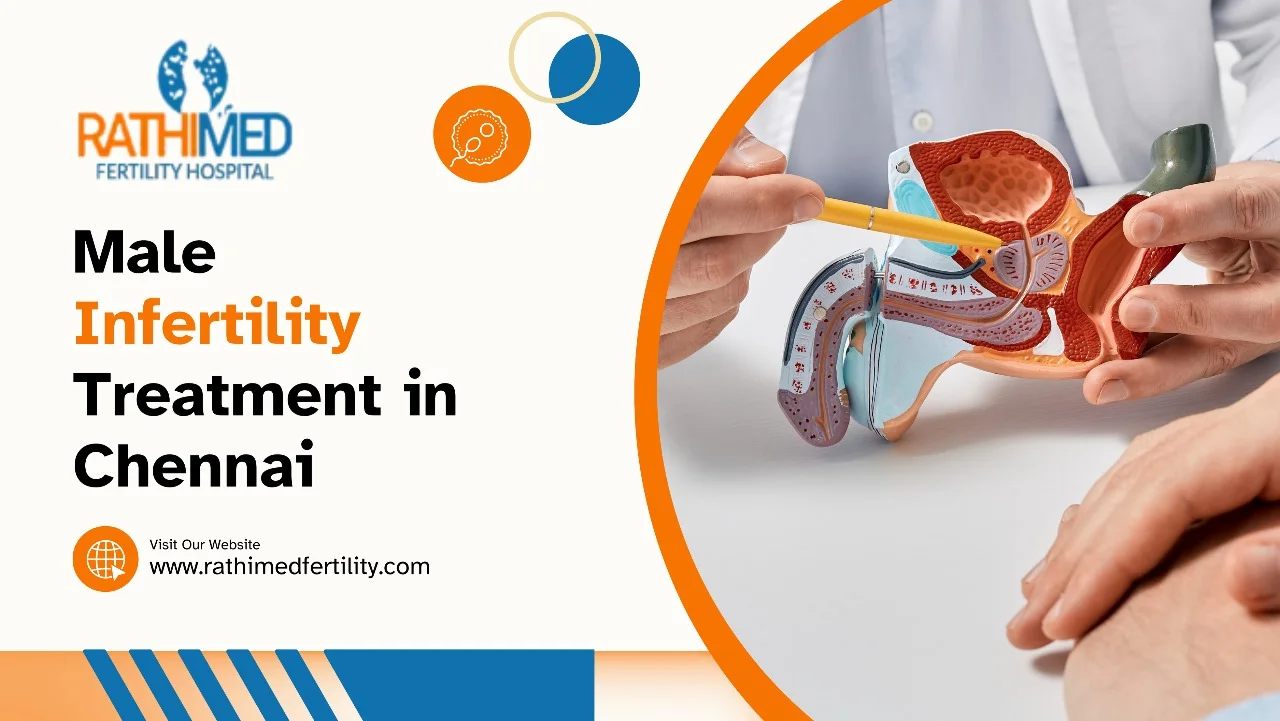
Infertility affects millions of couples worldwide, and male factors contribute to nearly 50% of all cases. Despite its prevalence, male infertility remains a sensitive and often overlooked issue. At RathiMed Fertility, we offer advanced and compassionate Male Infertility Treatment in Chennai, providing hope to couples striving to start a family.
Understanding Male Infertility
Male infertility refers to the inability of a man to cause pregnancy in a fertile female after a year of unprotected intercourse. It can result from various factors, including hormonal imbalances, lifestyle habits, medical conditions, and genetic abnormalities. Symptoms may not be obvious, making professional diagnosis crucial.
If you and your partner are facing challenges conceiving, it is essential to seek early intervention. RathiMed Fertility specializes in Male Infertility Treatment in Chennai, offering expert evaluation and customized care plans.
What is Male Infertility?
Male infertility refers to a man’s inability to cause pregnancy in a fertile female partner. It is usually linked to issues with sperm production, function, or delivery. Common causes include low sperm count, poor sperm motility, hormonal imbalances, genetic conditions, or lifestyle factors such as smoking and stress.
Seeking Male Infertility Treatment in Chennai can help identify the root cause through advanced diagnostic methods. Today, many couples benefit from Advanced male infertility treatment in Chennai, which offers personalized solutions to improve fertility outcomes.
What are the Symptoms of Male Infertility?
In many cases, male infertility may not show obvious symptoms until conception becomes difficult. However, some signs may include:
- Difficulty in achieving pregnancy: When a couple is unable to conceive even after regular unprotected intercourse for a year, it may indicate fertility issues. Seeking Male infertility treatment in Anna Nagar helps identify the underlying cause early.
- Low sexual desire or hormonal issues: Reduced libido can be linked to hormonal imbalances such as low testosterone levels. Proper diagnosis through Affordable male infertility treatment in Chennai can help restore hormonal health effectively.
- Erectile dysfunction or ejaculation problems: Difficulty in maintaining an erection or issues with ejaculation can impact sperm delivery. These conditions are treatable with timely medical intervention and expert care.
- Pain, swelling, or lumps in the testicular area: Discomfort or abnormalities in the testicles may indicate infections or conditions like varicocele. Early evaluation can prevent complications and improve fertility outcomes.
- Reduced facial or body hair indicating hormonal imbalance: A decrease in body or facial hair may signal hormonal disorders affecting sperm production. Advanced testing can help diagnose and treat such conditions efficiently.
Consulting specialists for Male infertility treatment in Anna Nagar ensures early diagnosis and timely care. With access to Affordable male infertility treatment in Chennai, individuals can address these symptoms effectively without financial stress.

Causes of Male Infertility
Several conditions can contribute to male infertility:
- Low Sperm Count or Poor Motility: One of the most common issues where sperm are too few or too slow to reach and fertilize an egg.
- Hormonal Disorders: Imbalances in testosterone or other hormones that regulate fertility.
- Infections or STIs: These can interfere with sperm production or health.
- Lifestyle Factors: Smoking, alcohol, obesity, stress, and exposure to toxins can significantly impact fertility.
Recognizing these factors early can pave the way for timely Male Infertility Treatment in Chennai.
Varicocele and Male Infertility
Varicocele is one of the most common — and most treatable — causes of male infertility, found in a significant proportion of men evaluated for fertility issues. It occurs when veins within the scrotum become enlarged, similar to varicose veins, raising testicular temperature and impairing sperm production.
Common signs include:
- A dull ache or heaviness in the scrotum, especially after standing for long periods
- Visible or palpable swelling above the testicle
- Testicular shrinkage on the affected side, in some cases
Treatment: A varicocelectomy — a microsurgical procedure to tie off the affected veins — is highly effective, with many patients showing measurable improvement in sperm parameters within 3–6 months post-surgery. Not all varicoceles require treatment; our specialists assess grade, symptoms, and semen impact before recommending surgery.
Does Age Affect Male Fertility?
While female fertility decline with age is widely discussed, male fertility also gradually decreases over time. After the age of 40–45, men may experience:
- A gradual decline in sperm motility and count
- Increased sperm DNA fragmentation
- Slightly higher risk of certain genetic conditions in offspring
- Longer time to conception, even with a partner of optimal reproductive age
Unlike female fertility, the decline is more gradual, but it is still a relevant factor that our specialists factor into diagnosis and treatment planning at RathiMed Fertility.
Diagnosis and Evaluation
At RathiMed Fertility, we follow a comprehensive diagnostic process to determine the exact cause of infertility. Some of the key evaluations include:
- Semen Analysis: Measures the quantity and quality of sperm.
- Hormonal Testing: Evaluates levels of testosterone and other reproductive hormones.
- Scrotal Ultrasound: Detects abnormalities like varicocele or obstruction.
- Genetic Testing: Identifies potential hereditary issues that may impact fertility.
Sperm DNA Fragmentation Index (DFI) Test
In cases of unexplained infertility, recurrent miscarriage, or repeated IVF/ICSI failure despite normal semen parameters, we recommend Sperm DNA Fragmentation testing. This test evaluates the genetic integrity of sperm — a factor not measured by a standard semen analysis. High DNA fragmentation can affect embryo development and pregnancy outcomes, even when sperm count and motility appear normal. Identifying this early allows our specialists to recommend targeted antioxidant therapy, lifestyle correction, or advanced sperm selection techniques during ART procedures.
Accurate diagnosis is the cornerstone of effective Male Infertility Treatment in Chennai, and our advanced lab facilities ensure reliable results.
What Do Semen Analysis Numbers Mean?
Many men receive a semen analysis report without understanding what the numbers actually indicate. Based on WHO reference standards, a healthy semen sample typically shows:
- Sperm Concentration: At least 15 million sperm per millilitre
- Total Sperm Count: At least 39 million per ejaculate
- Motility: At least 40% of sperm should be moving, with at least 30% showing progressive movement
- Morphology: At least 4% of sperm should have a normal shape
- Volume: At least 1.5 ml per ejaculate
Results below these thresholds are classified using specific medical terms:
- Oligospermia – Low sperm count
- Asthenozoospermia – Poor sperm motility
- Teratozoospermia – Abnormal sperm shape
- Azoospermia – Complete absence of sperm in the ejaculate
Understanding which category applies helps determine the most effective Male Infertility Treatment in Chennai for each individual case. A single abnormal report is not always conclusive — doctors usually recommend a repeat test after 2–3 months, since sperm production is a continuous cycle that takes around 72–90 days.
Male Infertility Treatment Options in Chennai
Based on the diagnosis, RathiMed Fertility provides a range of treatment options:
- Medication and Hormonal Therapy: Used to correct hormone imbalances or boost sperm production.
- Lifestyle Changes: Guidance on diet, exercise, and habits to improve overall reproductive health.
- Surgical Interventions: Procedures like varicocelectomy or sperm retrieval for cases of blockage or obstruction.
- Assisted Reproductive Technologies (ART):
- IVF (In Vitro Fertilization): Combines eggs and sperm outside the body for fertilization.
- ICSI (Intracytoplasmic Sperm Injection): A single sperm is injected directly into an egg. This is particularly helpful for severe male infertility.
Couples seeking ART can trust RathiMed’s cutting-edge technology and team of experienced professionals to guide them through every step of the Male Infertility Treatment in Chennai journey.
Azoospermia and Sperm Retrieval Procedures
Treating Azoospermia: Obstructive vs. Non-Obstructive
Azoospermia, or zero sperm count, affects a small but significant percentage of infertile men and is broadly classified into two types:
- Obstructive Azoospermia: Sperm production is normal, but a physical blockage (in the vas deferens, epididymis, or ejaculatory duct) prevents sperm from reaching the semen. This is often treatable with surgical correction or direct sperm retrieval.
- Non-Obstructive Azoospermia: Sperm production itself is impaired, usually due to hormonal issues, genetic conditions, or testicular failure. This requires a more detailed evaluation and specialized retrieval techniques.
Sperm Retrieval Techniques offered:
- TESA (Testicular Sperm Aspiration): A fine needle is used to extract sperm directly from testicular tissue.
- PESA (Percutaneous Epididymal Sperm Aspiration): Sperm is retrieved from the epididymis using a needle, typically for obstructive cases.
- MESA (Microsurgical Epididymal Sperm Aspiration): A microsurgical technique offering higher sperm yield, often used before planned ICSI cycles.
- Micro-TESE (Microdissection Testicular Sperm Extraction): A precision technique using a surgical microscope to locate sperm-producing areas within the testes — the preferred option for non-obstructive azoospermia.
Sperm retrieved through these methods can be used directly with ICSI, giving men with azoospermia a genuine chance at biological parenthood. This is a core part of our advanced Male Infertility Treatment in Chennai program, performed in coordination with our Andrology Laboratory.
Procedures and Treatments in Male Infertility
| Treatment Option | Best For | Invasiveness | Typical Timeline |
|---|---|---|---|
| Medication/Hormone Therapy | Hormonal imbalance, mild cases | Non-invasive | 3+ months to assess |
| Lifestyle Modification | Supportive, all cases | Non-invasive | 3 months+ |
| Varicocelectomy | Varicocele-related infertility | Minor surgery | Improvement in 3–6 months |
| Intrauterine Insemination (IUI) | Mild male factor, unexplained infertility | Minimally invasive | Per cycle |
| In Vitro Fertilization (IVF) | Moderate male factor | Minimally invasive | Per cycle |
| ICSI | Severe male factor, low count/motility | Minimally invasive | Per cycle |
| TESA/PESA/Micro-TESE + ICSI | Azoospermia treatment | Minor surgical procedure | Per cycle, combined with ICSI |
What is the Cost of Male Infertility Treatment?
The cost of treatment varies based on diagnosis, procedures, and clinic facilities. Basic treatments like medications may be affordable, while advanced procedures like IVF or ICSI can be more expensive.
On average, the Male infertility treatment cost in Chennai is considered reasonable compared to other metro cities, making it a preferred destination for fertility care. Clinics offering Affordable male infertility treatment in Chennai provide flexible packages and transparent pricing.
Additionally, the Male infertility treatment cost in Chennai depends on factors such as:
- Type of treatment required
- Number of treatment cycles
- Diagnostic tests and medications
- Expertise of the fertility specialist
Couples seeking quality care often explore Male infertility treatment in Anna Nagar, where reputed clinics combine affordability with advanced technology.
Your Treatment Journey — What to Expect
- Initial Consultation (Day 1): Detailed medical history review and physical examination.
- Diagnostic Testing (Week 1–2): Semen analysis, hormone panel, and imaging as needed. A repeat semen analysis may be advised after 6–8 weeks if the first result is abnormal.
- Results Review & Treatment Planning (Week 2–3): Specialist consultation to discuss findings and outline a personalized treatment path.
- Treatment Initiation: Depending on diagnosis, this may begin with medication (typically evaluated over 3 months), a surgical procedure, or direct progression to ART (IUI/IVF/ICSI).
- Follow-Up: Ongoing monitoring to track sperm parameter improvement or pregnancy progress.
Most straightforward cases move from consultation to a treatment plan within 2–3 weeks, though complex cases involving surgery or ART may take longer.
Common Myths About Male Fertility
Myth 1: Infertility is usually a woman’s problem.
Male factors contribute to roughly half of all infertility cases, either alone or alongside female factors. Both partners should be evaluated early.
Myth 2: If a man has no symptoms, his fertility must be fine.
Most male fertility problems have no visible signs. Erections, ejaculation, and libido can all be normal while sperm count, motility, or shape is affected. A semen analysis is the only reliable way to know.
Myth 3: Men stay fertile forever.
Men don’t have a “menopause,” but sperm quality, DNA integrity, and testosterone decline gradually with age, especially after 40. Advanced paternal age is linked to longer time to conception and higher miscarriage risk.
Myth 4: Tight underwear is the main cause of low sperm count.
Heat can affect sperm production, but underwear choice has a minor effect compared with factors like smoking, varicocele, obesity, or infections.
Myth 5: Frequent ejaculation lowers sperm count.
For most men, regular ejaculation (every 1-3 days) keeps sperm fresh and healthy. Very long abstinence can actually increase DNA damage in sperm.
Myth 6: Low sperm count means zero chance of conception.
Many men with low counts conceive naturally or with treatments like IUI, IVF, or ICSI. Even men with no sperm in the ejaculate may have sperm retrievable through procedures such as TESA or micro-TESE.
Myth 7: Infertility means a man is less masculine.
Fertility is unrelated to masculinity, virility, or sexual performance. It’s a medical condition, and in most cases it’s treatable or manageable.
Factors Affecting Treatment Cost
The cost of male fertility treatment varies widely because every patient’s situation is different. The main factors are:
1. Underlying cause and diagnosis. Initial tests (semen analysis, hormone profile, scrotal ultrasound, genetic testing) add to the cost, and the diagnosis determines everything that follows.
2. Type of treatment required.
- Medication or lifestyle-based care is generally the least expensive.
- Surgery (for example, varicocele repair) costs more.
- Assisted reproduction (IUI, IVF, ICSI) is considerably more expensive.
- Surgical sperm retrieval (TESA, PESA, micro-TESE) adds procedure and lab costs.
3. Number of cycles needed. Many couples need more than one attempt, and costs add up with each cycle.
4. Female partner’s factors. If the partner’s age or fertility also needs treatment, the overall plan and cost increase.
5. Clinic and laboratory quality. Advanced embryology labs, experienced specialists, and better technology often come at a higher price but can improve outcomes.
6. Add-on technologies. Sperm DNA fragmentation testing, IMSI, sperm selection techniques, embryo freezing, and genetic screening (PGT) are optional extras that raise the total.
7. Medications and follow-up. Hormonal therapies, supplements, and repeated monitoring visits contribute to ongoing costs.
8. Location and insurance. Costs differ by city and country, and insurance coverage for fertility treatment varies greatly.
Tip: Ask your clinic for a transparent, itemized estimate that clearly lists what is and isn’t included.
Lifestyle Factors That Affect Male Fertility
Sperm takes about 2-3 months to develop, so positive changes made today can improve semen quality within a few months.
Harmful factors
- Smoking: Reduces sperm count, motility, and DNA quality.
- Excess alcohol: Heavy drinking lowers testosterone and sperm quality.
- Recreational drugs and anabolic steroids: Steroids and cannabis can sharply reduce sperm production, sometimes severely.
- Obesity: Disrupts hormone balance and is linked to lower sperm count and quality.
- Poor diet: Diets high in processed foods and trans fats are associated with poorer semen quality.
- Chronic stress and poor sleep: Raise cortisol and can lower testosterone and sperm quality.
- Heat exposure: Frequent hot tubs, saunas, long hours with a laptop on the lap, or prolonged sitting can raise testicular temperature.
- Environmental toxins: Pesticides, heavy metals, solvents, and certain industrial chemicals can harm sperm.
- Excessive intense exercise: Overtraining may lower testosterone, while moderate exercise is beneficial.
Helpful habits
- Eat a balanced diet rich in fruits, vegetables, whole grains, nuts, and lean protein, with antioxidant-rich foods (vitamin C, E, zinc, selenium, folate).
- Exercise moderately and maintain a healthy weight.
- Sleep 7-8 hours a night.
- Manage stress through meditation, hobbies, or counseling.
- Quit smoking and limit alcohol.
- Avoid unnecessary heat exposure and protect yourself from workplace toxins.
- Discuss any medications or supplements with a doctor, as some can affect fertility.
Emotional Impact of Male Infertility
Male infertility is often a silent struggle. Because it’s rarely discussed openly, many men feel isolated while carrying a heavy emotional burden.
Common emotional responses
- Guilt and shame: Many men blame themselves or feel they’ve “failed” their partner.
- Lowered self-esteem: Cultural pressure that ties fertility to masculinity can deeply affect self-worth.
- Anxiety and depression: Uncertainty, repeated tests, and failed cycles can take a toll on mental health.
- Stress and anger: Frustration with the process, the cost, or even the situation itself is common.
- Social withdrawal: Men may avoid family gatherings, baby-related events, or friends who are becoming parents.
- Pressure around intimacy: Timed intercourse and sample collection can make sex feel clinical and stressful.
Impact on relationships
Couples may struggle to communicate, with one partner feeling blamed or the other feeling unsupported. Open, honest communication helps both partners face the journey as a team rather than as individuals.
Coping and support
- Talk openly with your partner and share feelings, not just plans.
- Seek counseling or therapy, ideally from someone experienced in fertility issues.
- Join support groups, in person or online, to connect with others who understand.
- Educate yourself. Understanding the condition reduces fear and self-blame.
- Maintain healthy routines: exercise, sleep, and time for activities you enjoy.
- Remember that infertility is a medical condition, not a reflection of your worth, and that effective treatments exist.
If feelings of sadness, hopelessness, or anxiety persist, reaching out to a mental health professional is a sign of strength.
Why Choose RathiMed Fertility?
When looking for the Best male fertility doctor in Chennai, RathiMed Fertility is a name you can count on. Our approach is centered around:
- Experienced Specialists: Our fertility experts have a proven track record and international training.
- Advanced Technology: We use the latest diagnostic tools and fertility techniques.
- Individualized Care: Every patient receives a personalized treatment plan based on their specific condition.
- Confidentiality and Compassion: We understand the emotional strain infertility can cause and offer empathetic care.
Choosing the Best male fertility doctor in Chennai ensures better outcomes and peace of mind for you and your partner.
Emotional and Psychological Support
Male infertility can be emotionally challenging. Feelings of guilt, anxiety, or low self-esteem are common. At RathiMed, we don’t just focus on physical treatment. We provide:
- Counseling Services: To help individuals and couples cope with emotional stress.
- Support Groups: A safe space to share experiences and build strength together.
We believe that holistic care is key to successful Male Infertility Treatment in Chennai.
Meet Your Fertility Specialist
Dr. G. Praveena Ragunanthan Senior Consultant in Obstetrics and Gynecology | Director and Managing Partner, Rathimed Speciality Hospital
Dr. Praveena is a Senior Consultant specializing in Obstetrics, Gynecology, Reproductive Endocrinology, and Infertility, with over 10+ years of experience. As Director and Managing Partner of Rathimed Speciality Hospital, she leads the team delivering Male Infertility Treatment in Chennai alongside broader fertility and gynecological care.
Qualifications:
- MBBS, MS (Obstetrics & Gynaecology) — Sri Ramachandra Medical College & Research Institute, Chennai
- Diploma in Reproductive Medicine (DRM) — Kiel University, Germany
Areas of Expertise:
- Personalized infertility treatment plans (including male-factor cases)
- Advanced laparoscopic and hysteroscopic procedures
- Reproductive endocrinology consultations
- Fertility-enhancing surgical procedures (laparoscopic myomectomy, hysterectomy)
📖 View Dr. Praveena’s full profile
Note for the male infertility page specifically: Dr. Praveena’s listed specialty is Obstetrics/Gynecology and Reproductive Endocrinology rather than Andrology/Urology. If male infertility cases (varicocelectomy, TESA/PESA/Micro-TESE) are actually handled by a urologist/andrologist on the team, that specialist should be named and credentialed here instead — patients researching “best male fertility doctor” specifically expect to see the person who treats male-factor cases. If Dr. Praveena oversees male infertility treatment as part of the fertility program, it’s worth clarifying that collaborative-care structure on the page (e.g., “in coordination with our andrology team”) so the claim reads accurately.
Success Stories at RathiMed Fertility
Our patients’ success stories speak volumes about the quality of care we offer. Many couples who had lost hope are now proud parents, thanks to timely intervention and expert guidance. With a high success rate and the expertise of the Best male fertility doctor in Chennai, RathiMed Fertility is a trusted name for male infertility solutions in Chennai.
Conclusion
Male infertility is more common than many believe, but the good news is that it’s often treatable. With accurate diagnosis, the right medical approach, and a supportive team, parenthood is within reach. RathiMed Fertility offers comprehensive Male Infertility Treatment in Chennai, empowering couples to overcome challenges and fulfill their dream of having a child.
📞 Call RathiMed Fertility today at 98414 47007 to schedule a consultation with the Best male fertility doctor in Chennai and take your first step toward parenthood.
Check Out: Affordable IVF Treatment.