
Fertility is influenced by many factors, but one of the most powerful and often overlooked aspects is daily lifestyle. In today’s fast-paced world, unhealthy habits, stress, and environmental exposures are increasingly contributing to reproductive challenges. Understanding lifestyle factors affecting fertility can help individuals and couples take control of their reproductive health and improve their chances of conception naturally.
At Rathimed Fertility Center, we believe that small, consistent lifestyle changes can make a significant difference. Whether you are planning to conceive or facing difficulties, knowing how your habits impact fertility is the first step toward a healthier future.
Overview of Fertility and Lifestyle Connection
Fertility refers to the natural ability to conceive and reproduce. While age and medical conditions play a role, there is growing awareness about the lifestyle impact on fertility and how daily choices influence reproductive outcomes.
Lifestyle factors can either support or harm hormonal balance, egg quality, and sperm health. The connection between fertility and lifestyle choices is strong, as the body responds directly to nutrition, stress levels, sleep, and physical activity.
Broadly, fertility factors can be divided into:
- Non-modifiable factors: Age, genetics, medical history
- Modifiable factors: Diet, exercise, stress, habits
Focusing on modifiable factors gives individuals the power to improve their reproductive health naturally.
What Are Lifestyle Factors Affecting Fertility?
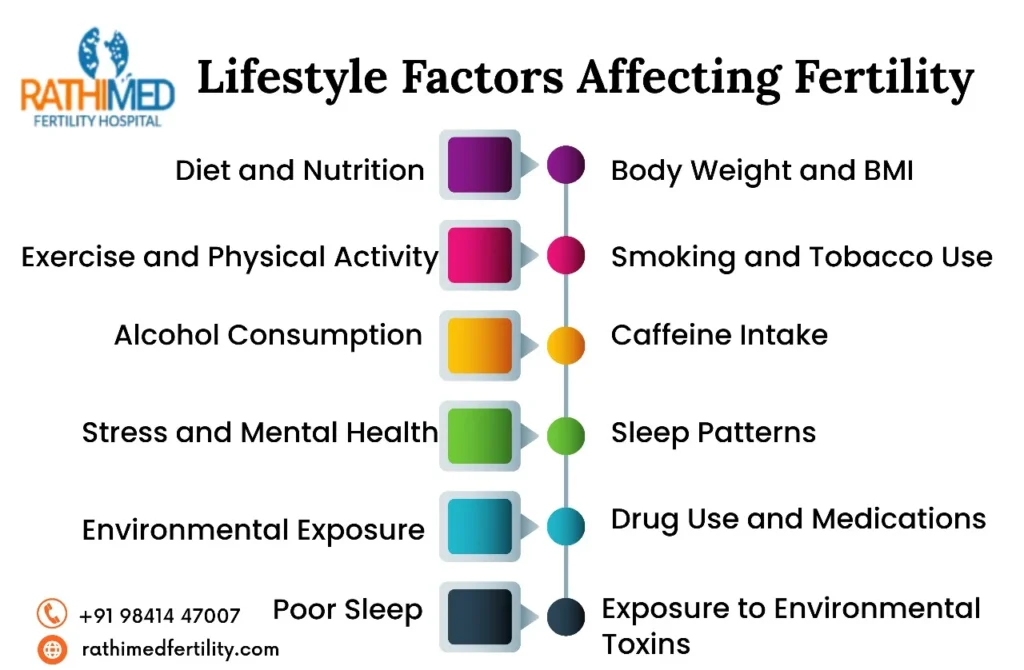
Lifestyle factors affecting fertility include everyday habits and environmental exposures that influence reproductive health. These factors often go unnoticed but can have a long-term impact.
Key lifestyle factors include:
- Poor diet and nutritional deficiencies
- Lack of physical activity or excessive exercise
- Chronic stress and anxiety
- Irregular sleep patterns
- Smoking, alcohol, and substance use
- Exposure to environmental toxins
Understanding these lifestyle causes of infertility helps in identifying areas that need improvement.
Diet and Nutrition: The Foundation of Fertility
A healthy diet plays a crucial role in reproductive health. Nutrients directly affect hormone production, ovulation, and sperm quality.
Foods That Improve Fertility
- Fresh fruits and vegetables rich in antioxidants
- Whole grains for sustained energy
- Healthy fats like nuts, seeds, and olive oil
- Protein sources such as eggs, legumes, and lean meats
Foods to Avoid
- Processed and junk foods
- Excess sugar and refined carbohydrates
- Trans fats and fried foods
The effects of lifestyle on reproductive health are clearly visible when diet is imbalanced. Poor nutrition can lead to hormonal disturbances and reduced fertility potential.
Body Weight and Exercise
Maintaining a healthy weight is essential for reproductive health. Both underweight and overweight individuals may face fertility challenges.
Impact of Weight on Fertility
- Excess weight can disrupt hormone levels and ovulation
- Low body weight may lead to irregular menstrual cycles
- Obesity is linked to conditions like PCOS
Role of Exercise
Regular physical activity improves blood circulation, reduces stress, and supports hormonal balance. However, excessive exercise can negatively affect fertility, especially in women.
Adopting balanced routines is one of the best lifestyle changes to improve fertility naturally.
Stress and Mental Health
Stress is one of the most common yet underestimated factors affecting fertility. The link between stress and infertility is well established, as chronic stress interferes with hormonal signals.
How Stress Affects Fertility
- Disrupts ovulation in women
- Reduces sperm quality in men
- Impacts libido and emotional well-being
Managing Stress
- Practice meditation and mindfulness
- Engage in yoga or light exercise
- Seek counseling or support when needed
Understanding how lifestyle affects fertility includes recognizing the importance of mental health in reproductive success.
Sleep Patterns and Fertility
Sleep plays a vital role in maintaining hormonal balance. Poor sleep quality or irregular sleep cycles can negatively affect fertility.
Effects of Poor Sleep
- Disrupts reproductive hormones
- Affects ovulation cycles
- Reduces sperm production
Improving Sleep Hygiene
- Maintain a consistent sleep schedule
- Avoid screen time before bed
- Create a calm and comfortable sleep environment
Healthy sleep is a key part of positive lifestyle habits and fertility improvement.
Smoking, Alcohol, and Substance Use
Unhealthy habits such as smoking and alcohol consumption significantly impact reproductive health.
Smoking
- Damages egg quality
- Reduces sperm count and motility
- Accelerates reproductive aging
Alcohol
- Affects hormone levels
- Reduces chances of conception
Quitting these habits is one of the most effective lifestyle changes to boost fertility.
Environmental and Occupational Factors
Exposure to harmful chemicals and pollutants is another important aspect of lifestyle factors affecting fertility.
Common Risks
- Pesticides and industrial chemicals
- Air pollution
- Heat exposure (affecting sperm production)
Prevention Tips
- Use natural and safe products
- Avoid prolonged exposure to toxins
- Maintain proper workplace safety
Reducing exposure improves overall reproductive health and minimizes lifestyle causes of infertility.
Tips to Improve Fertility Through Lifestyle Changes
| Lifestyle Factor | Impact on Fertility | How to Improve |
| Stress and Mental Health | Chronic stress can disrupt ovulation, sperm production, and hormonal balance. Stress and infertility are closely linked in both men and women. | Practice yoga, meditation, breathing exercises, and seek emotional support or therapy if needed. |
| Unhealthy Diet | Poor eating habits can lead to obesity, hormonal imbalances, and nutrient deficiencies. There is a strong connection between diet and fertility health. | Focus on whole foods, antioxidants, and fertility-friendly nutrients like zinc, folate, and omega-3 fatty acids. |
| Being Overweight or Underweight | A high or low BMI can affect ovulation and reduce IVF success rates. Weight extremes are major lifestyle factors affecting fertility. | Aim for a healthy BMI (18.5–24.9) with balanced nutrition and regular physical activity. |
| Smoking and Tobacco Use | Tobacco damages eggs and sperm, accelerates ovarian aging, and reduces implantation success. It’s a major contributor to lifestyle factors affecting fertility. | Quit smoking and avoid secondhand smoke; consider cessation programs if necessary. |
| Alcohol Consumption | Regular or heavy drinking lowers fertility in both sexes. It impacts hormone levels and embryo development. | Regular or heavy drinking lowers fertility in both sexes. It impacts hormone levels and embryo development. |
| Environmental Toxins | Exposure to pesticides, BPA, heavy metals, and air pollution can negatively affect reproductive function. | Reduce plastic use, eat organic, avoid harsh chemicals, and improve indoor air quality. |
| Lack of Quality Sleep | Sleep influences hormonal cycles. Irregular or insufficient rest affects ovulation and sperm quality. | Maintain a sleep schedule, limit screen time at night, and aim for 7–8 hours of sleep. |
| Inactivity or Over-Exercising | Both sedentary habits and excessive workouts can alter hormone levels and disrupt menstrual cycles. | Engage in moderate physical activity (30 minutes daily); avoid overtraining. |
| Recreational Drugs and Medications | Substances like marijuana, steroids, and some prescription drugs can impair fertility and hormone production. | Consult your doctor about safe medications when trying to conceive. Avoid recreational drugs entirely. |
| Delaying Parenthood | Fertility declines with age. Lifestyle choices such as career prioritization may unintentionally impact fertility potential. | Get fertility evaluations early. Consider fertility preservation if planning to delay childbearing. |
Lifestyle Factors Affecting Fertility in Women
Women are highly sensitive to lifestyle changes due to hormonal fluctuations.
Common Issues
- Irregular menstrual cycles
- PCOS linked to poor lifestyle habits
- Hormonal imbalances
Unhealthy routines can significantly contribute to lifestyle factors affecting fertility in women, making early intervention crucial.
Lifestyle Factors Affecting Fertility in Men
Male fertility is equally influenced by lifestyle choices.
Key Factors
- Low sperm count due to poor diet
- Sedentary lifestyle reducing sperm quality
- Heat exposure from laptops or tight clothing
Improving lifestyle habits and fertility in men can enhance reproductive outcomes and overall health.
What Can You Do to Improve Fertility Naturally?
Taking proactive steps can significantly improve fertility. Simple daily habits can create long-term benefits.
Practical Tips
- Eat a balanced and nutritious diet
- Exercise regularly but moderately
- Manage stress effectively
- Get adequate sleep
- Avoid smoking and alcohol
These are proven lifestyle changes to boost fertility and support natural conception.
Why Addressing Lifestyle Factors Early Is Important
Ignoring unhealthy habits can lead to long-term fertility issues. Addressing lifestyle factors affecting fertility early helps in:
- Preventing hormonal imbalances
- Improving egg and sperm quality
- Increasing chances of natural conception
- Enhancing success rates of fertility treatments
The earlier you act, the better your reproductive outcomes.
When Should You See a Fertility Specialist?
While lifestyle changes are effective, medical guidance may be necessary in certain cases.
Consult a Specialist If:
- You have been trying to conceive for over a year
- Irregular menstrual cycles persist
- There are known medical conditions like PCOS
- Male fertility issues are suspected
Professional support helps address deeper concerns beyond lifestyle impact on fertility.
How Rathimed Fertility Center Can Help
At Rathimed Fertility Center, we combine medical expertise with personalized care to address fertility challenges.
Our Approach
- Comprehensive fertility evaluation
- Customized treatment plans
- Guidance on lifestyle changes to boost fertility
- Advanced reproductive technologies
We focus on both medical treatment and improving fertility and lifestyle choices to ensure the best outcomes for our patients.
Conclusion
Fertility is deeply connected to the way we live our daily lives. Understanding and improving lifestyle factors affecting fertility can significantly enhance reproductive health and increase the chances of conception.
From maintaining a healthy diet to managing stress and avoiding harmful habits, every small step counts. By making conscious choices and seeking timely medical support, couples can move closer to their dream of parenthood.
At Rathimed Fertility Center, we are here to guide you through every step of your fertility journey with care, expertise, and compassion.
Take the first step today. Book your consultation with Rathimed Fertility Centre and embrace the power of lifestyle change.